Vietnam’s Agricultural Exports Shift from “Quantity” to “Quality” to Strengthen Competitiveness in 2026
Vietnam’s Agricultural Exports Shift from “Quantity” to “Quality” to Strengthen Competitiveness in 2026 Vietnam’s agricultural, forestry and fishery exports continued to record positive growth in the first months of 2026. At the same time, the sector is facing increasing pressure from green standards, traceability requirements and intense competition in international markets. These factors are forcing the agricultural sector to accelerate its transformation from a growth model based on production volume to one driven by quality, branding and added value.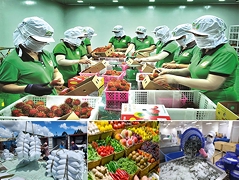 In the first four months of 2026, Vietnam’s agricultural, forestry and fishery exports reached US$23.04 billion, up 5.4% compared with the same period in 2025. Many key product groups continued to grow, with fruit and vegetable exports reaching approximately US$2.05 billion, up 21.6%, while seafood exports totaled US$3.54 billion, an increase of 10.4%. Although total imports rose by 12% to US$17.65 billion, the sector still maintained a trade surplus, reflecting its ability to adapt to fluctuations in the global economy.
In terms of markets, Asia remained the largest export destination for Vietnamese agricultural products, accounting for 44.1% of total export turnover. China, the United States and Japan continued to be the three key markets. Notably, exports to China increased sharply by 28.8%, driven by recovering demand for products such as fruit and vegetables, cassava and seafood. In contrast, exports to the United States fell by 4.8%, reflecting tighter consumer spending and rising trade barriers in developed economies.
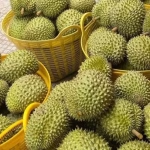
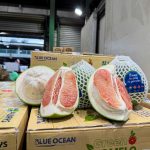
By product category, fruit and vegetables remained a bright spot, with strong growth driven largely by the surge in durian exports. Pepper exports increased in both volume and value as global prices remained high. However, several major products, including wood, rice, cashew nuts and tea, showed signs of stagnation or decline. Notably, although some sectors recorded higher production volumes, their added value did not increase proportionally, highlighting the continued dependence on raw and minimally processed exports.
According to the Ministry of Agriculture and Environment, current export growth still contains elements of unsustainability due to dependence on seasonal production and market fluctuations. Meanwhile, many agricultural sectors continue to face limitations in deep processing, brand development and value-chain integration, making their competitiveness less stable.
The situation is becoming more challenging as the global trend toward greener trade creates greater pressure on Vietnamese agricultural exports. New regulations from the European Union, the United States and Japan concerning carbon emissions, deforestation, food safety and traceability are becoming increasingly stringent. This requires businesses to make comprehensive changes in both production and supply-chain management, while domestic production remains fragmented, with weak linkages and inconsistent standards.
In response, and with the goal of achieving more than US$74 billion in agricultural, forestry and fishery exports in 2026, the Ministry of Agriculture and Environment has clearly identified a development strategy focused on shifting from “quantity” to “quality.” Quality, branding, green standards and added value will become the foundation of competitiveness. Key sectors such as wood, seafood, fruit and vegetables, coffee and cashew nuts are being encouraged to pursue deeper growth by increasing processing and enhancing product value.
At the same time, the agricultural sector will accelerate production restructuring, develop standardized raw-material production areas, strengthen value-chain linkages and expand into promising markets such as the Middle East, Africa and Halal markets. Measures related to logistics, credit, trade promotion and green transformation will also be implemented in a coordinated manner to support businesses.
In a global trading environment characterized by rapid changes and increasingly stringent standards, agricultural export growth is no longer simply a race for production volume. The shift from “quantity” to “quality” has become an inevitable requirement and an important foundation for improving the competitiveness and sustainable development of Vietnamese agricultural products in the new era.
Source: Tạp chí Kinh tế – Tài chính