



[Market News] India and Vietnam could lead Asia’s coffee consumption growth
According to Nikkei Asia, India and Vietnam will lead coffee consumption growth in Asian markets over the next few years. This is an area where industry experts predict fierce competition will force chains to innovate to survive. Nathanael Lim, beverage expert at Euromonitor Asia, said coffee drinking habits were correlated with discretionary income and urbanization. He used these two factors to determine which countries will lead the coffee consumption boom between 2022 and 2027.
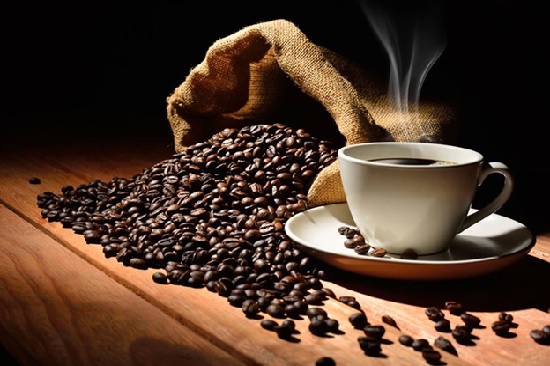
Euromonitor data shows that developing countries such as the Philippines and Indonesia will also have great demand for coffee. However, India and Vietnam are still the top two countries on the list, with consumption forecast to increase by 37% and 32% respectively until 2027.
Vietnam is already the king of coffee as the world’s largest exporter of robusta coffee.
But now, Vietnam is also “exporting” coffee culture as businesses and ministries and industries are making efforts to popularize milky coffee and filter coffee globally. In the domestic market, although shops sell different types of coffee, they still maintain a “no rush” coffee culture. And this is soft power in the domestic market.
“Coffee is energy for creativity,” Dang Duong Hai, assistant president of Trung Nguyen coffee shop chain, shared with Nikkei Asia.
His company entered foreign markets this year, including opening stores in China and the US. He describes the drink in lofty terms as a symbol of Asia’s rise, not only because Asian brands are able to enter new markets, but also because the region’s coffee drinking habits are growing, in tandem with rapid economic growth.
Gross domestic product, consumer awareness and a young, growing population are other factors Euomonitor considered in its forecast.
For example, India became the most populous country on the planet this year, and the International Monetary Fund predicts it will leap from the fifth to third largest economy by 2027.
Euromonitor said the countries with the highest annual growth in disposable income in urban Asia in 2017-2022 started with China at 6%; followed by India, 5% and Vietnam, 4%.
“More and more people drink coffee and they are willing to pay more,” Mr. Lim said in a presentation at the Asia International Coffee conference taking place on December 5-6 in Ho Chi Minh City.
But “fierce competition” is forcing companies to try “innovative solutions to excite consumers” across Asia, he said.
For example, they are developing smartphone apps that allow customers to take orders from “robot baristas,” essentially vending machines.
App-based pickup and delivery in general have surged during the pandemic, minimizing contact, aided by the region’s army of motorbike drivers. This practice continues after COVID-19. Accordingly, businesses offer gifts to advertise their applications, while collecting millions of user data.
These efforts are helping domestic companies prevail. For example, the world’s largest coffee chain, Starbucks, lags behind Highlands in Vietnam and trails Luckin in China despite controversies in 2019.
Mr. Kim Knudsen, sales director at equipment supplier GEA, said local businesses are producing better instant coffee and moving up the value chain beyond simply growing coffee.
And coffee drinkers are becoming more sophisticated, according to Ms. Nguyen Hoai Tam Anh, chief representative of JDE Vietnam company. She said there is no more room in the market for lower-end coffees mixed with soy.
“The younger generation knows how to taste coffee, and is looking for quality coffee,” she said.
(vietnambiz.vn)
![[Market News] Chili exports earned nearly 18 million USD, an increase of 31.7%](https://goldengreen.vn/wp-content/uploads/2026/03/z1701246-4838-150x150.jpg)
![[Market news] Vietnam is the largest banana supplier to the Chinese market](https://goldengreen.vn/wp-content/uploads/2026/03/trong-chuoi-tieu-hong-xuat-khau-min-8068-150x150.jpg)
![[Market News] Tea ranks top 5 in the world, earning nearly 30 million USD in 2 months](https://goldengreen.vn/wp-content/uploads/2026/03/xk-che-sang-anh-5217-1600251667860x0-1731-150x150.jpg)
![[Market News] Vietnam – Korea cooperate to invest and improve the agricultural value chain](https://goldengreen.vn/wp-content/uploads/2026/03/viet-nam-han-quoc-1832024a-5696-150x150.jpg)
![[Market News] Tightening supply, export coffee prices fluctuate](https://goldengreen.vn/wp-content/uploads/2026/03/ca-phe2-9360-150x150.jpg)
![[Market News] Why have prices of many exported agricultural products increased to record levels?](https://goldengreen.vn/wp-content/uploads/2026/03/nong-san120240423214752-5613-150x150.jpg)
![[Market News] Surpassing Thailand and India, Vietnam becomes the largest rice exporter to Singapore](https://goldengreen.vn/wp-content/uploads/2026/03/gao-1-9490-150x150.jpg)