[Market News] Chili exports earned nearly 18 million USD, an increase of 31.7%
Chili is a familiar fruit to Vietnamese consumers. Farmers consider the chili plant to be a “profitable” plant because chili peppers have short-term growth characteristics, can be intercropped with fruit trees and do not require much care, so they are suitable for the farming conditions of farmers across the country. Normally, chili plants will be planted around September to November every year. After 2 months of planting, chili plants begin to harvest 3 to 4 times in about 3 months, with the highest quality fruit with an ideal weight of up to 4 kg per plant.
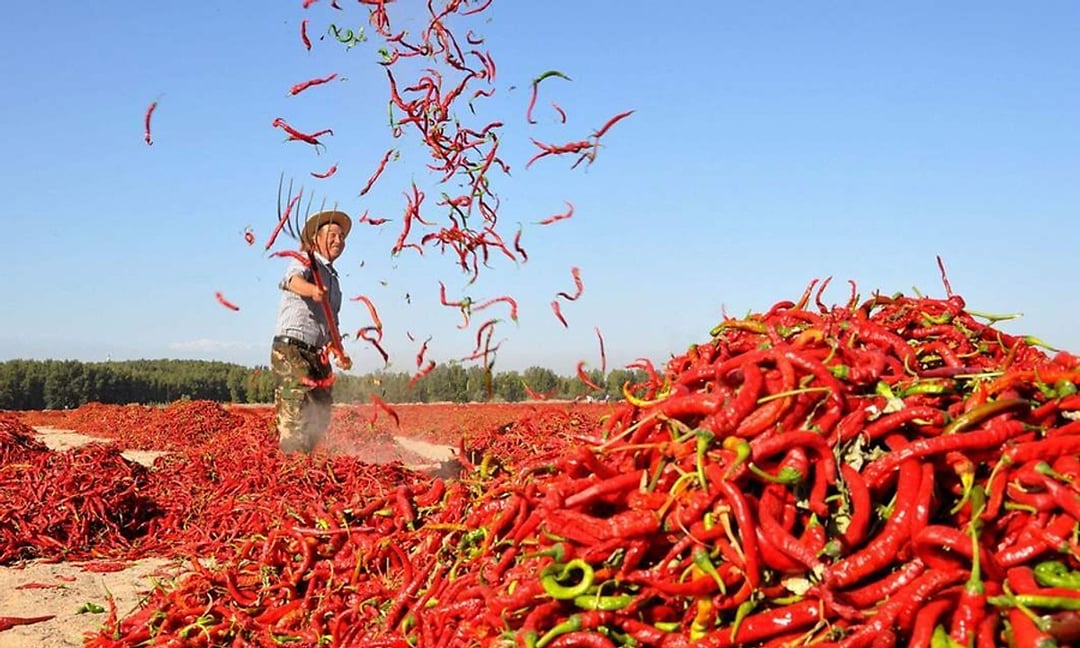
Since March 2022, Vietnamese fresh chili is approved for export to the Chinese market. Accordingly, all shipments of fresh chili must be quarantined by Vietnamese functional units or authorized by Vietnamese functional units, and relevant parameters must be clearly noted in the plant quarantine certificate.
For the Chinese market, one of the reasons that China increases imports of Vietnamese chili is its high spiciness and variety of types. Some types of exported chili include: Chili pepper, chili pepper, yellow chili pepper, sweet chili pepper, and local chili pepper.
In addition, seasonal differences also help increase export output. In China, the chili harvest season mainly takes place around June to October every year.
In Vietnam, chili peppers are usually grown in two seasons, so there are harvest times from April to early July and from January to February. Chili peppers are grown scattered throughout the provinces and cities across the country. The Mekong Delta is considered the chili capital of Vietnam when chili is grown most in the provinces of Dong Thap, An Giang, Tien Giang, Soc Trang, Vinh Long and Tra Vinh with a total area of over 7,000 hectares, with an output of about 100,000 tons/year.
Source: Ngoc Ngan – Congthuong.vn